
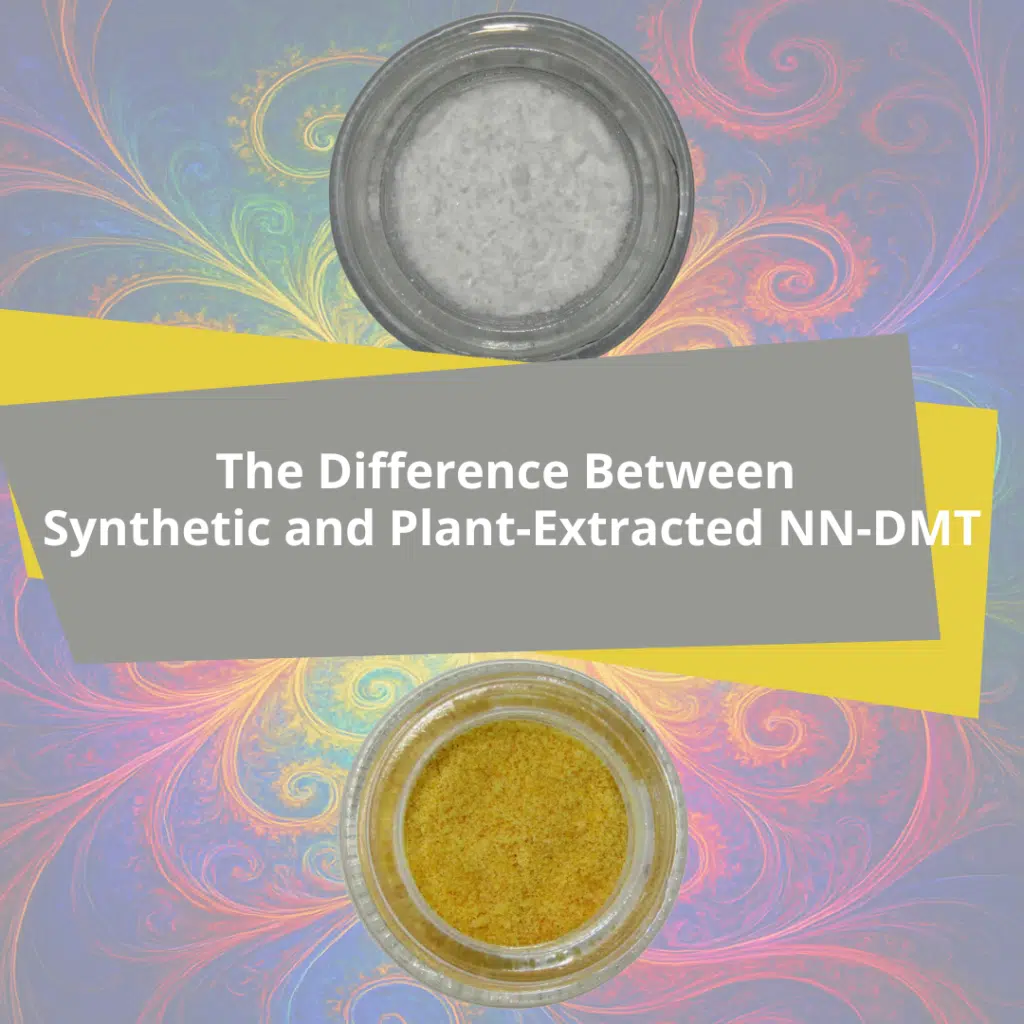
When discussing N,N-DMT, one of the most common questions is whether the experience changes depending on how it is produced — particularly when comparing plant-extracted DMT from Mimosa hostilis root bark versus synthetic, pharmaceutical-grade N,N-DMT.
While many people claim there are differences in “feel” or effects, the most important point is simple:
N,N-DMT is the same molecule either way.
When purity and dosage are equal, the core psychedelic experience is expected to be fundamentally the same.
That said, real-world products and batches can behave differently — and that is where most of the reported differences come from.
The Key Similarity: N,N-DMT Is Still N,N-DMT
Whether N,N-DMT is extracted from a botanical source like Mimosa hostilis or created in a lab under controlled conditions, the active compound remains identical at the molecular level.
This means the primary effects most people associate with N,N-DMT — such as rapid onset, intense visual immersion, profound shifts in perception, and a short duration — are driven by the same active ingredient regardless of origin.
Why Some People Report Different Effects
Despite the shared chemistry, users often describe the experience as slightly different depending on the source. In most cases, these differences are not caused by “plant spirit” vs “lab-grade chemistry”, but by purity, consistency, and how the product vaporizes or delivers a dose.
Commonly Reported Descriptions (Subjective)
Some individuals describe plant-extracted DMT as:
- more “earthy” or organic feeling
- slightly heavier in the body
- more variable from batch to batch
- sometimes harsher when inhaled
Meanwhile, high-purity synthetic or pharmaceutical-grade DMT is often described as:
- cleaner and smoother overall
- more predictable in strength
- clearer in headspace
- easier to dose consistently
These reports are subjective, but they are extremely common in user discussions.
What Actually Causes the Difference (In Most Cases)
1) Purity and Trace Residues
Botanical extractions can sometimes retain tiny amounts of:
- plant oils or waxes
- leftover solvents (if not fully removed)
- oxidized compounds from heat or prolonged storage
Even trace residues can influence how the product feels during inhalation and how cleanly it vaporizes.
In comparison, pharmaceutical-grade synthetic DMT is typically produced in a controlled way that prioritizes purity and repeatability, which can reduce variability.
2) Crystal Structure and Vaporization Behaviour
Even when the molecule is the same, different batches can crystallize in different ways. This may affect:
- melt behaviour
- how evenly a dose vaporizes
- how likely it is to scorch or burn
This is one reason two batches can feel noticeably different despite having similar stated potency.
3) Consumption Method Matters More Than Source
Many reported differences between “plant DMT” and “synthetic DMT” are actually differences in:
- device temperature
- technique and inhalation timing
- whether the dose is vaporized cleanly or partially burned
- how quickly the full dose is delivered
A cleaner, more consistent batch often feels “smoother” because it is easier to use predictably — not because the psychoactive effects are inherently different.
4) Mindset and Expectations Influence the Experience
The DMT experience is highly sensitive to:
- setting and environment
- mental state and intention
- familiarity with the compound
- expectations about what the experience “should” feel like
If someone believes one source is more “natural” or more “clinical”, that belief can influence how they interpret sensations and overall intensity.
Final Takeaway: Do the Effects Actually Differ?
From an educational perspective, the most accurate summary is:
Pure N,N-DMT is N,N-DMT — the core effects are driven by the same molecule.
However, many users report that high-purity synthetic DMT tends to feel cleaner and more consistent, while plant-extracted DMT can feel more variable, often due to minor impurities, residue, oxidation, or differences in vaporization.
For those who value predictability and a cleaner inhalation experience, pharmaceutical-grade purity is often associated with a smoother, more consistent experience.